
Phone: (647) 894 7706
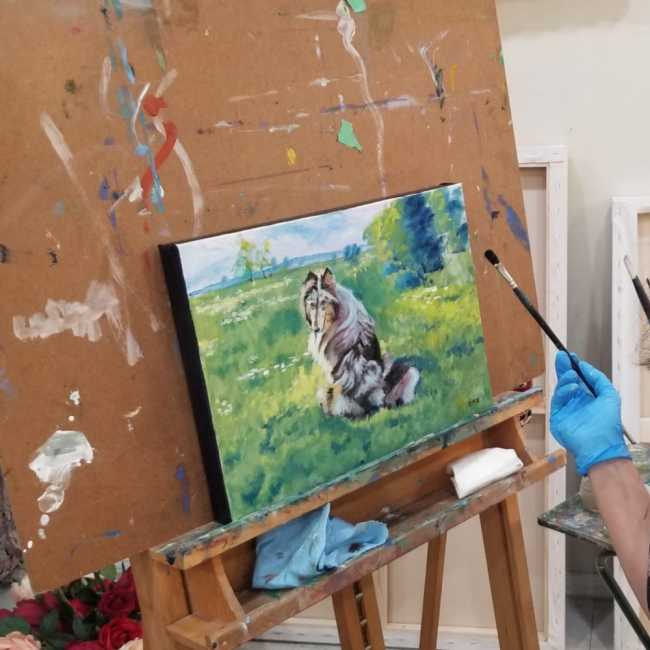
There are several facets to mastering oil painting. For example, a successful artwork demonstrates exceptional brush control, line quality, and attention to detail. However, attention to detail is one aspect that most students confuse with adding as many elements to a painting as possible. The two are very different. A good painting must have visual rest areas for it to look coherent and pleasing.
Structured painting classes in Toronto, like the ones we provide at VR School of Art, encourage students to treat their paintings as a complete visual experience rather than a detail dump. In today’s blog, we will tell you why we place so much emphasis on visual rest areas during our classes.
A visual rest area can be defined as that part of a painting that contains fewer visual elements and less contrast. Instead, it features softer transitions that guide the viewer’s attention toward the focal point of the canvas. This technique is commonly taught in our painting classes in Toronto. We teach students how to treat this section of their artwork as intentional rather than empty or incomplete.
The primary purpose of a visual rest area is to create balance in a painting. Every painting needs it. If every section of it is filled with strong colors or commanding details, the entire composition is bound to look overwhelming.
That is why we urge students during our oil painting classes to add quieter passages to their artwork. It creates a sense of rhythm instead of causing the viewer’s eyes to jump from one detail to the next in a quick and haphazard manner.
At the end of the day, the goal is to use softer edges, simpler shapes, and weaker colors to control how much visual attention each section of the canvas gets. Supporting areas should logically recede into the background so that the focal elements can stand out more organically. This prevents the painting from looking chaotic.
For students, it is critical to understand that simple does not mean incomplete, that calm does not mean boring, or that sparse does not mean empty. It is all about making a deliberate choice about where to draw attention and where to let it go.
At VR School of Art, set in North York, Ontario, we help our students understand unique and relevant concepts such as visual rest areas to help them create harmonious artworks. Contact us to learn how our painting classes are the stepping stone to painting more effective compositions.